Hidden on Your Plate: How Everyday Foods Sabotage Your Medications Without Warning
Photo: Christine Cabalo, Public domain, via Wikimedia Commons
Most people fill their prescriptions, read the label, and follow the dosage instructions carefully. What far fewer people do is consider what they ate an hour before taking that pill—or what they are about to eat an hour after. The relationship between food and medication is one of the most consequential and least discussed aspects of pharmaceutical care in the United States today.
At Aark Pharmaceuticals, our clinical team regularly encounters patients whose medications are not working as expected—not because of a flawed diagnosis or an ineffective drug, but because of an interaction hiding in plain sight on their dinner plate. This guide exists to change that.
Why Food and Drugs Interact in the First Place
To understand food-drug interactions, it helps to understand how medications travel through the body. After swallowing a pill, the drug is absorbed through the gastrointestinal tract, processed by the liver, and distributed via the bloodstream to its target site. At nearly every stage of this journey, food can intervene.
Some foods alter the pH of the stomach, changing how readily a drug dissolves. Others bind directly to drug molecules, preventing absorption. Still others affect the enzymes responsible for metabolizing medications—meaning the drug either accumulates to dangerous levels or is broken down too rapidly to be effective. The consequences of these interactions range from reduced therapeutic benefit to serious toxicity.
Grapefruit: The Most Famous Offender
No food-drug interaction is better documented—or more routinely ignored—than grapefruit. Grapefruit and its close relatives, including Seville oranges and pomelos, contain compounds called furanocoumarins that inhibit an enzyme known as CYP3A4. This enzyme is responsible for metabolizing a remarkable number of commonly prescribed medications.
When CYP3A4 is blocked, drugs that rely on it for breakdown accumulate in the bloodstream at concentrations far higher than intended. The affected medication list is extensive and includes:
- Statins such as atorvastatin (Lipitor) and simvastatin, used to manage cholesterol. Elevated blood levels increase the risk of muscle damage, a condition called rhabdomyolysis.
- Calcium channel blockers like amlodipine and felodipine, prescribed for high blood pressure and heart conditions.
- Certain immunosuppressants including cyclosporine, critical for transplant patients.
- Some psychiatric medications, including buspirone and certain benzodiazepines.
What makes grapefruit particularly treacherous is that a single glass of juice consumed in the morning can suppress CYP3A4 activity for up to 24 hours. Spacing out the fruit and the medication by a few hours offers no meaningful protection. For patients on any of the above drug classes, grapefruit should generally be avoided entirely—a conversation worth having explicitly with a pharmacist.
Dairy, Minerals, and the Antibiotic Problem
Calcium is an essential mineral and a cornerstone of bone health, but it has a tendency to form insoluble complexes with certain antibiotic classes. Fluoroquinolones—which include ciprofloxacin and levofloxacin—and tetracyclines such as doxycycline are particularly vulnerable.
When these antibiotics bind to calcium ions in dairy products, fortified juices, or antacids, the resulting complex cannot be absorbed through the intestinal wall. The drug passes through the digestive system without ever entering the bloodstream in meaningful amounts. The clinical consequence is straightforward: the antibiotic fails to reach therapeutic levels, and the infection it was prescribed to treat may persist or worsen.
The standard guidance for fluoroquinolones and tetracyclines is to take them at least two hours before or six hours after consuming dairy products, calcium-fortified foods, or calcium-containing antacids. This timing window allows the drug to be absorbed without interference.
Iron supplements present a similar challenge. Iron chelates with several drug classes, including levothyroxine (used for thyroid conditions) and certain antibiotics. Patients taking thyroid medication alongside iron supplements should separate doses by at least four hours.
Vitamin K and Blood Thinners: A Delicate Balance
Warfarin remains one of the most widely prescribed anticoagulants in the United States, and it has one of the most sensitive relationships with diet. Warfarin works by inhibiting vitamin K-dependent clotting factors. Foods rich in vitamin K—leafy greens such as kale, spinach, collard greens, and broccoli—can blunt the drug's anticoagulant effect, potentially allowing dangerous clots to form.
This does not mean warfarin patients must eliminate leafy vegetables. Rather, the goal is consistency. Dramatic fluctuations in vitamin K intake cause INR levels (the measure of blood clotting time used to monitor warfarin therapy) to swing unpredictably. A patient who eats a spinach salad every day maintains a relatively stable vitamin K baseline; a patient who eats none for two weeks and then consumes a large serving creates a clinical problem.
Patients on warfarin should discuss their dietary habits openly with their healthcare provider and pharmacist, aiming for stable rather than minimal vitamin K consumption.
Alcohol: An Interaction Category of Its Own
Alcohol interacts with an unusually broad range of medications, and the mechanisms are multiple. With central nervous system depressants—sedatives, sleep aids, opioid pain medications, and certain antihistamines—alcohol compounds sedation to a degree that can be life-threatening. With metronidazole (Flagyl) and disulfiram (Antabuse), alcohol triggers a severe reaction involving flushing, nausea, and rapid heart rate. With acetaminophen (Tylenol), regular alcohol consumption significantly elevates the risk of liver damage even at standard doses.
The safest practice is to review any new prescription or over-the-counter medication for alcohol interactions before consuming alcoholic beverages. Pharmacists at Aark Pharmaceuticals are available to provide this guidance as part of every dispensing interaction.
High-Tyramine Foods and MAO Inhibitors
Monoamine oxidase inhibitors (MAOIs), a class of antidepressants, carry one of the most serious dietary restrictions in all of pharmacology. MAO is an enzyme that breaks down tyramine, a naturally occurring compound found in aged cheeses, cured meats, fermented foods, and certain wines. When MAO is inhibited, tyramine accumulates and can trigger a hypertensive crisis—a sudden, severe spike in blood pressure that may lead to stroke.
While MAOIs are prescribed less frequently than they once were, they remain in use for treatment-resistant depression. Any patient initiating MAOI therapy must receive detailed dietary counseling before beginning treatment.
Practical Strategies for Safer Medication Timing
Knowing the interactions is valuable; building habits around them is what actually protects patients. The following approaches are worth adopting:
- Read the label completely. Phrases like "take on an empty stomach" or "avoid dairy" are not arbitrary—they reflect specific absorption data.
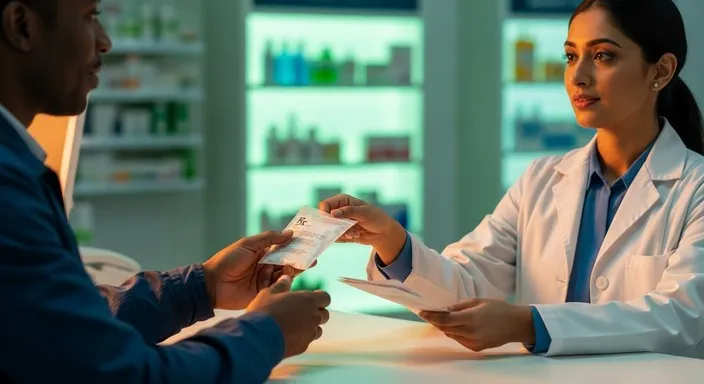
- Ask your pharmacist directly. When picking up any new prescription, ask: "Are there any foods or beverages I should avoid with this medication?"
- Establish a consistent medication routine. Taking medications at the same time relative to meals each day reduces variability and makes interactions easier to anticipate.
- Do not assume "natural" means safe. Herbal supplements, fortified foods, and nutritional drinks can all interact with prescription drugs.
- Update your pharmacist when your diet changes significantly. This is particularly relevant for patients on warfarin, thyroid medications, or immunosuppressants.
A Final Word from Our Pharmacy Team
At Aark Pharmaceuticals, we believe that a prescription is only as effective as the knowledge surrounding it. The medications we dispense are carefully selected, professionally verified, and accompanied by expert guidance—because we understand that the gap between taking a medication and it working as intended is often bridged by information.
If you have questions about any food-drug interaction relevant to your current regimen, our pharmacists are here to help. Trusted medications and expert guidance are not separate offerings—they are two parts of the same commitment to your health.