Same Pill, Different Story: How Your Liver and Kidneys Quietly Control Every Medication You Take
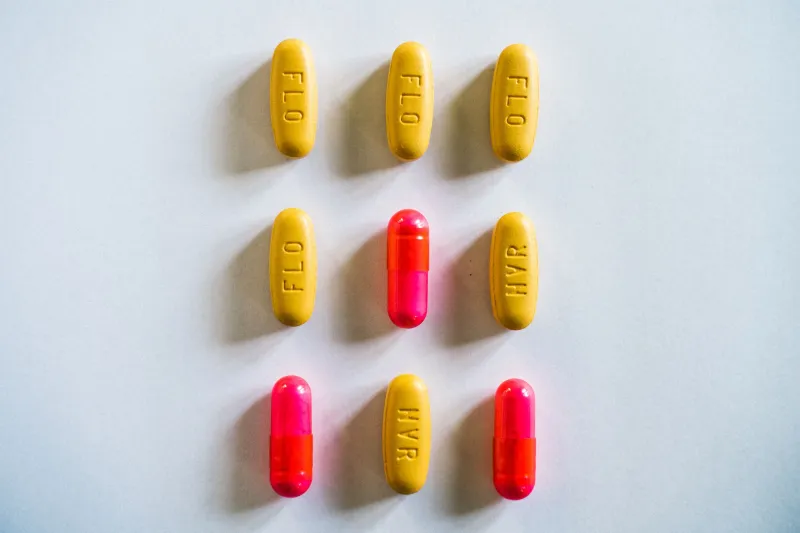
Two patients. Identical diagnoses. The same prescription, the same dose, the same instructions. Yet one improves steadily while the other experiences toxicity or no relief at all. The answer to this paradox often lies not in the medication itself, but in the silent biological machinery processing it — your liver and kidneys.
For most Americans, the conversation about a new prescription begins and ends with dosage and side effects. Rarely does it include a frank discussion about whether your body is even equipped to process that medication the way the manufacturer intended. Understanding how organ function shapes drug behavior is one of the most underutilized tools in modern patient care — and one that could meaningfully change how you approach every prescription you fill.
The Body's Internal Pharmacy
Before any medication can do its job, it must first survive a complex biological gauntlet. After swallowing a tablet or capsule, the drug travels through the digestive system and enters the bloodstream. From there, it makes its way to the liver — the body's primary processing facility for foreign substances.
The liver uses a vast network of enzymes, most notably those belonging to the cytochrome P450 (CYP450) family, to chemically transform medications. This process, known as hepatic metabolism, can activate a drug, deactivate it, or convert it into entirely new compounds. The kidneys then take on the downstream responsibility of filtering metabolized drug components and eliminating them through urine.
This two-organ relay is not a passive conveyor belt. It is dynamic, individualized, and — critically — highly variable from one person to the next.
Why Identical Doses Produce Different Outcomes
Genetics play a foundational role in this variability. The genes that encode CYP450 enzymes differ meaningfully across individuals. Pharmacologists categorize people into metabolizer types based on how quickly these enzymes process specific drugs:
- Poor metabolizers break down certain medications very slowly, allowing drug concentrations to accumulate in the bloodstream — often reaching toxic levels even at standard doses.
- Ultra-rapid metabolizers process medications so quickly that therapeutic concentrations are never fully achieved, rendering the drug ineffective before it can act.
- Intermediate and extensive metabolizers fall between these poles, representing what clinical trials typically assume to be the "average" patient.
The problem is that a significant portion of the US population does not fit that average. Studies estimate that up to 10% of people of European ancestry are poor metabolizers of CYP2D6 — an enzyme responsible for processing dozens of commonly prescribed medications, including certain antidepressants, antipsychotics, and pain relievers. Among other ethnic groups, these percentages shift considerably, meaning metabolizer status is also intertwined with ancestry in ways that standard prescribing rarely accounts for.
When the Kidneys Fall Behind
While the liver handles transformation, the kidneys manage elimination. Many medications — or their active metabolites — exit the body primarily through renal filtration. When kidney function is reduced, even modestly, drug clearance slows. What would normally be a therapeutic dose in a healthy individual becomes an accumulating burden in someone with impaired renal function.
The challenge is that kidney decline is frequently silent. Chronic kidney disease (CKD) affects an estimated 37 million Americans, yet the majority are unaware of their condition until it has progressed substantially. A person with stage 2 or early stage 3 CKD may feel entirely well while their kidneys are operating at a fraction of optimal capacity — quietly allowing certain medications to linger in the body far longer than intended.
Drugs like metformin, several antibiotics, blood thinners, and specific heart medications require dose adjustments or outright avoidance in patients with reduced kidney function. Without routine renal monitoring, these adjustments are never made.
The Liver's Hidden Vulnerabilities
Hepatic function presents its own complexities. Conditions such as non-alcoholic fatty liver disease (NAFLD), cirrhosis, and hepatitis can impair enzyme activity in ways that are not always captured by standard liver function panels. It is entirely possible for a patient to have mildly abnormal enzyme levels that fall within a laboratory's "normal" reference range while still experiencing meaningfully altered drug metabolism.
Additionally, the liver's processing capacity changes with age. As individuals grow older, hepatic blood flow decreases and enzyme activity tends to diminish. This is one reason why medication dosing in older adults is a specialized clinical concern — and why starting low and going slow is a guiding principle in geriatric pharmacology.
What Pharmacogenomic Testing Can Reveal
Pharmacogenomic testing — genetic analysis that predicts how a person will metabolize specific medications — has moved from research laboratories into clinical practice over the past decade. Several commercial tests are now available that can identify a patient's metabolizer status for dozens of relevant enzymes.
These tests do not replace clinical judgment, but they can provide prescribers with actionable information before a medication is chosen rather than after a patient has suffered an adverse reaction or experienced treatment failure. For patients with a history of unexpected drug reactions, poor response to standard antidepressants, or those managing complex multi-drug regimens, discussing pharmacogenomic testing with a physician or clinical pharmacist is a reasonable and increasingly practical step.
Questions Worth Asking Before Your Next Prescription
Armed with this understanding, patients are better positioned to engage meaningfully with their prescribers. Consider raising the following before starting any new medication:
1. Has my kidney function been tested recently? A basic metabolic panel or a specific creatinine and eGFR test can reveal how well your kidneys are filtering. If you are over 60, have diabetes, or have a history of high blood pressure, this is particularly important.
2. Does this medication require dose adjustment based on renal or hepatic function? This is a direct, answerable question. Your prescriber or pharmacist can consult prescribing references immediately.
3. Am I a candidate for pharmacogenomic testing? If you have experienced unexplained side effects, treatment failures, or are beginning a medication known to have significant metabolic variability — such as certain psychiatric or cardiovascular drugs — this conversation is worth initiating.
4. Does my current medication list include drugs that compete for the same metabolic enzymes? Many drug-drug interactions occur precisely because two medications compete for the same CYP450 enzyme, causing one or both to accumulate. A clinical pharmacist is specifically trained to evaluate these interactions.
Personalized Medicine Starts With Informed Patients
The promise of personalized medicine is compelling: treatments tailored not to an average population but to the individual sitting in the exam room. While the field continues to advance, much of its practical application depends on patients who understand enough to ask the right questions.
Your liver and kidneys are not passive participants in your treatment. They are active arbiters of whether a medication reaches its target, at what concentration, and for how long. Treating them as invisible background processes — rather than central variables in your care — is one of the most common and consequential oversights in routine prescribing.
At Aark Pharmaceuticals, we believe that trusted medications and expert guidance go hand in hand. Filling a prescription is only one part of the equation. Understanding how your body will receive it is the other — and that conversation deserves a place in every clinical encounter.


