Lost in Translation: What Pharmacists Wish Every Patient Understood About Medication Instructions
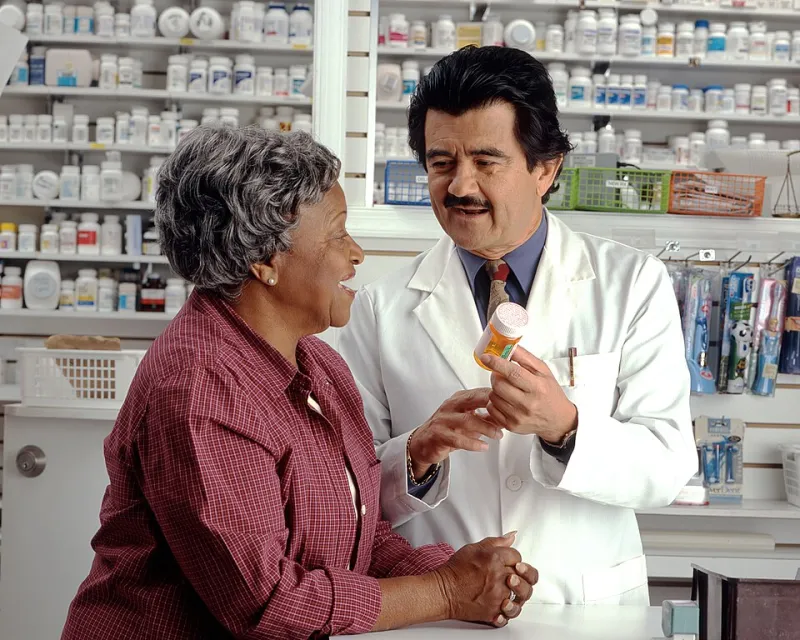
Photo: Rhoda Baer (Photographer), Public domain, via Wikimedia Commons
If you have ever stood in your kitchen holding a prescription bottle and genuinely wondered whether "take with food" means a full meal or a single cracker, you are not alone. Medication instructions are written with the expectation of clarity, but in practice, they generate confusion at a scale that surprises even seasoned healthcare professionals.
Pharmacists—the most accessible members of the healthcare team—field these questions every day. More troubling, they also encounter patients who never thought to ask, made an assumption, and suffered consequences as a result. The following is an honest account of the instructions most frequently misunderstood, drawn from the collective experience of pharmacists working across retail, hospital, and specialty pharmacy settings.
"Take With Food": A Three-Word Instruction With Dozens of Interpretations
This is, without question, the most misinterpreted direction on any prescription label. Patients interpret it in wildly different ways: some take their medication mid-meal; others eat a handful of crackers and consider the obligation fulfilled; still others take the pill and then eat an hour later, assuming proximity is sufficient.
The instruction exists for one of two distinct reasons, and the reason matters enormously. For some medications—nonsteroidal anti-inflammatory drugs (NSAIDs) like ibuprofen, for example—food serves as a buffer that protects the stomach lining from irritation. In this case, a small snack genuinely is sufficient. For other medications, particularly certain antifungals like itraconazole or fat-soluble drugs like isotretinoin, food is required because dietary fat is necessary for the drug to be absorbed properly into the bloodstream. In those cases, a cracker accomplishes nothing therapeutically meaningful.
"Patients assume 'take with food' is always about stomach comfort," one pharmacist noted. "Sometimes it's about whether the drug even works. Those are completely different situations, and the label doesn't distinguish between them."
When you receive a new prescription with this instruction, ask specifically: Is this to protect my stomach, or does food affect how the medication is absorbed?
"Take Twice Daily": The Timing Assumption That Undermines Effectiveness
Twice daily sounds straightforward. Most patients interpret it as morning and evening—which may or may not be what the prescriber intended. For certain medications, particularly antibiotics like amoxicillin, the instruction means every twelve hours, and that interval matters clinically. Maintaining consistent drug levels in the bloodstream is essential for the medication to suppress bacterial growth effectively. Taking doses at 7 a.m. and 9 p.m. leaves a fourteen-hour gap on one side and a ten-hour gap on the other.
For other medications—certain antihypertensives, for instance—the timing is more flexible, and a morning-and-evening pattern is entirely appropriate. The label cannot communicate this distinction. Only a pharmacist or physician can.
The practical takeaway: when a new prescription says "twice daily," ask whether that means every twelve hours precisely or whether morning and evening is acceptable. It is a thirty-second question that can meaningfully affect your treatment outcome.
"Avoid Prolonged Sun Exposure": Underestimated and Frequently Ignored
This warning appears on an extensive list of medications, including certain antibiotics (particularly fluoroquinolones and tetracyclines), diuretics, antipsychotics, and some acne treatments. Patients often interpret it as a general lifestyle suggestion—the pharmaceutical equivalent of "stay hydrated." It is not.
Drug-induced photosensitivity is a genuine pharmacological phenomenon. These medications alter the skin's response to ultraviolet radiation, dramatically increasing the risk of severe sunburn, blistering, and long-term skin damage even with relatively brief outdoor exposure. Some reactions occur through phototoxicity—a direct chemical reaction between the drug and UV light in the skin. Others involve photoallergy, an immune-mediated response that can persist even after the medication is discontinued.
Pharmacists report that patients on doxycycline are among the most frequently counseled on this point, particularly during summer months. "I've had patients come back with serious sunburns after a day at the beach," one pharmacist recalled. "They thought the warning was a formality."
If your medication carries this instruction, wear broad-spectrum SPF 30 or higher sunscreen daily, cover exposed skin when outdoors, and avoid peak sun hours between 10 a.m. and 4 p.m.
"Do Not Crush or Chew": The Instruction That Protects More Than Convenience
Patients who have difficulty swallowing tablets sometimes crush them without consulting their pharmacist, reasoning that the active ingredient remains unchanged. For many medications, this reasoning is correct and crushing is permissible. For others, it is genuinely dangerous.
Extended-release and controlled-release formulations—medications labeled ER, XR, XL, SR, or CR—are engineered to release their active ingredient gradually over many hours. The coating or matrix structure of the tablet is not incidental packaging; it is the delivery mechanism. Crushing an extended-release opioid, for example, releases the entire dose at once, converting a controlled twelve-hour medication into an immediate-release dose with serious overdose potential.
Enteric-coated tablets present a different issue. Their coating is designed to survive the acidic environment of the stomach and dissolve in the small intestine, either to protect the stomach from the drug or to protect the drug from stomach acid. Crushing removes that protection entirely.
Before crushing or splitting any tablet, confirm with your pharmacist that the formulation permits it. This is especially critical for any medication with a controlled-release designation.
"Complete the Full Course": Why Patients Stop Early and Why That Matters
Antibiotic adherence is a public health issue, not merely an individual one. When patients begin feeling better after three or four days of a ten-day antibiotic course, the temptation to stop is understandable—and consistently dangerous. The bacteria most susceptible to the antibiotic are typically eliminated first. Those that remain are often the hardier, more resistant organisms. Stopping early allows them to survive, multiply, and potentially cause a recurrence that is more difficult to treat.
Beyond antibiotic resistance, incomplete courses of corticosteroids prescribed for inflammation can cause adrenal insufficiency—a potentially serious hormonal complication—if the tapering schedule is not followed. Antidepressants stopped abruptly without physician guidance can trigger discontinuation syndrome, producing flu-like symptoms, mood instability, and sensory disturbances.
"Feeling better is not the same as being better," is a phrase pharmacists use frequently. The instruction to complete the full course is not pharmaceutical conservatism—it is clinical necessity.
The Gray Area of "As Needed"
PRN medications—those taken as needed rather than on a fixed schedule—introduce a different set of interpretive challenges. Patients frequently either underuse them (enduring preventable discomfort out of concern about dependency or side effects) or overuse them (exceeding recommended daily limits without realizing it).
Acetaminophen is a prime example. Available in dozens of OTC and prescription products simultaneously, patients taking a prescription pain reliever that contains acetaminophen may not realize they are compounding the dose when they also take Tylenol for a headache. The maximum daily dose of 4,000 mg—lower in individuals who drink regularly—can be reached more quickly than most patients anticipate.
For any as-needed medication, confirm the maximum number of doses permitted in a twenty-four-hour period and the minimum interval between doses. Ask whether there are other products in your medicine cabinet containing the same active ingredient.
Empowering the Pharmacy Counter Conversation
The prescription label is a starting point, not a complete instruction manual. Pharmacists are trained specifically to bridge the gap between what the label says and what patients actually need to understand. At Aark Pharmaceuticals, every dispensed medication comes with the opportunity to ask questions—and we encourage patients to use it.
Before leaving the pharmacy, consider asking: Why does this instruction exist? Does food or timing affect how well this medication works? Are there any other products I should avoid while taking this? What should I do if I miss a dose?
These are not burdensome questions. They are the questions that transform a prescription into a genuinely effective treatment.